Yasin Malik, who was awarded life imprisonment by the NIA court in Delhi in terror funding case , has been among the top separatist leaders in Kashmir. Believed to be one of the chief architects of the militant struggle in the valley, he gave up arms in 1994. A report by Riyaz Wani
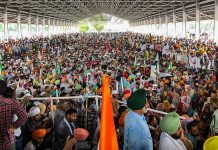
On May 25 when the NIA court in Delhi was mulling the quantum of punishment to be handed to Jammu and Kashmir Liberation Front chief Yasin Malik, parts of Srinagar including Malik’s locality Maisuma erupted in a spontaneous fury and the markets promptly shut down. The protests continued after the court awarded Malik life imprisonment in the terror funding case. The following day, however, the anger abated as the life imprisonment was generally perceived as preferable to death sentence something which can also be challenged in the higher courts and possibly even reduced.
Malik has been among the top separatist leaders in Kashmir. He is counted one among the separatist triumvirate along with Mirwaiz Umar Farooq and Syed Ali Geelani who passed away in September last year. He commands a wide popular following across the Valley. But unlike the other two, Malik is regarded as one of the chief architects of the militant struggle in 1989 and has since been the central figure of the campaign for Azadi. It was he who along with his colleagues Javed Mir, Ashfaq Majid Wani, and Abdul Hamid Shiekh had started the armed campaign in Kashmir in 1989 – the last two of them have since been killed.
So, he will always be relevant to the political scene in Kashmir with his life imprisonment only enhancing his stature as a symbol of Kashmiri separatist aspirations. His incarceration will thus be a perpetual source of grievance for Kashmiris and a fuel to the sentiment for Azadi.
Also, Malik has been the most prominent secular face of the separatist movement and has, in the past, also been acceptable to the west. It would, therefore, be hard for New Delhi to stick a religious label on him and project him as someone who wants to create an Islamic state.
As for the militant campaign in Kashmir, it is expected to go on regardless of him. In any case, Malik had given up arms in 1994 and decided to follow Gandhian non-violent ways to pursue a peaceful political struggle. From a militant outfit, the JKLF became a political organization – albeit, like Hurriyat, it stayed away from the electoral politics. This, often, made him a target of criticism by the militants who taunted him for following Gandhian principles.