What does US court’s curbing of Trump tariffs mean for India?
In a landmark 6–3 ruling, the Supreme Court of the United States struck down President Donald Trump’s sweeping “emergency” tariffs, holding that he exceeded his statutory authority. The judgment recalibrates U.S. trade policy and carries implications for India, writes Charanjit Ahuja
By Charanjit Ahuja
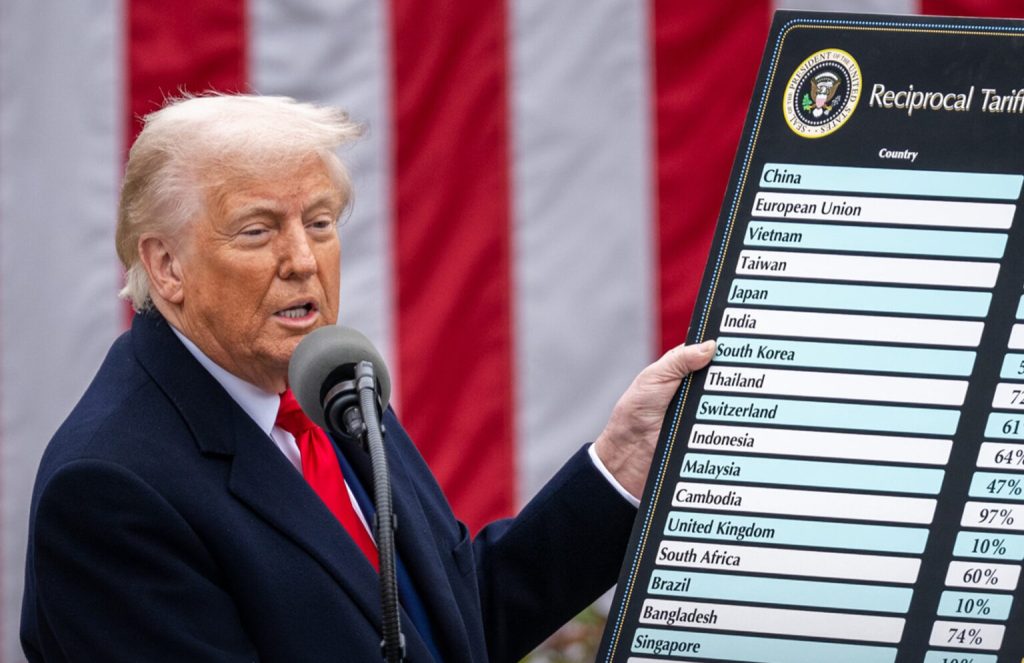
In a landmark 6–3 ruling, the Supreme Court of the United States has struck down former President Donald Trump’s sweeping “emergency” tariffs, holding that he exceeded his statutory authority by invoking emergency economic powers to impose broad import duties. The judgment is more than a domestic constitutional rebuke. It recalibrates the balance of power in U.S. trade policy, injects fresh uncertainty into global commerce, and carries important implications for India.
At the heart of the dispute was the use of the International Emergency Economic Powers Act (IEEPA), a 1977 law designed to empower presidents to respond swiftly to genuine national emergencies — typically through sanctions, asset freezes or restrictions on financial transactions.
The Court’s majority concluded that IEEPA does not explicitly authorize the imposition of tariffs. Tariffs, in constitutional terms, amount to taxes, and taxation authority rests primarily with Congress. Expansive use of emergency powers to restructure trade policy triggers what American jurisprudence calls a “major questions” concern — requiring clear legislative approval.
In effect, the Court has drawn a bright constitutional line: presidents cannot rely on general emergency statutes to unilaterally redesign U.S. trade architecture.
President Trump reacted sharply, calling the ruling disappointing and asserting that alternative legal routes remain available. He subsequently announced a 10% global tariff for 150 days, reportedly relying on Section 122 of the Trade Act of 1974, which allows temporary safeguard measures without prior congressional approval.
This new approach differs in two critical ways: It is uniform, applying equally to all trading partners. It is time-bound — beyond 150 days, congressional consent would be necessary.
While narrower than the previously struck-down emergency tariffs, the move signals that tariff activism remains central to Trump’s trade strategy.
Impact on India
Tariff compression — from uncertainty to uniformity, and for Indian exporters, the most immediate shift is structural. Earlier reciprocal tariffs had created a patchwork of rates — some considerably higher than standard Most-Favoured-Nation (MFN) levels. The Court’s intervention effectively wipes out those differentiated emergency duties.
Under the newly announced 10% global tariff regime, India faces: a flat 10% temporary duty (in addition to baseline MFN tariffs). This has resulted in greater predictability compared with fluctuating reciprocal rates.
For sectors such as textiles, engineering goods, auto components, chemicals and certain pharmaceuticals, this uniform structure may reduce pricing volatility and contract risk in the short term.
The recent ruling of the Supreme Court of the United States striking down former President Donald Trump’s emergency tariffs has not only reshaped American trade law — it has also directly affected India’s diplomatic calendar.