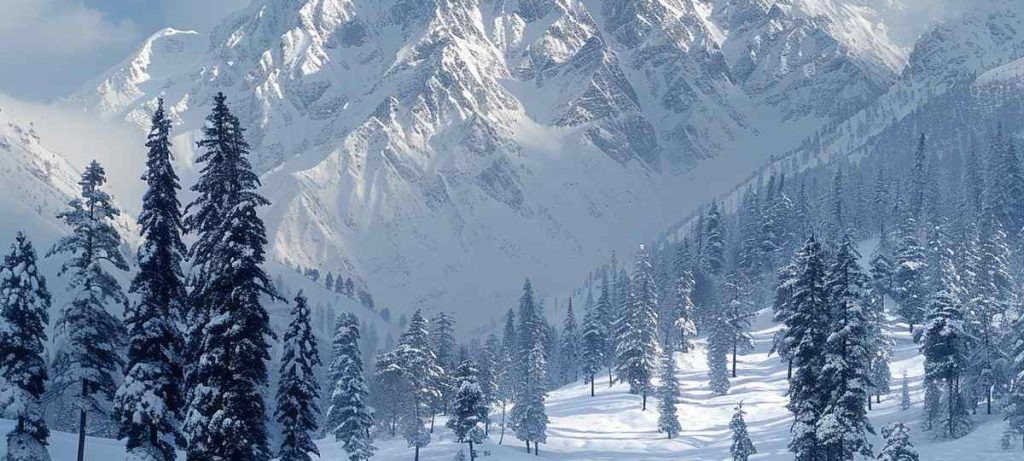
After weeks of alarmingly dry skies and a 96 per cent January rainfall deficit, fresh snowfall across Kashmir has eased water worries and revived tourism confidence, offering relief to agriculture hydropower livelihoods battered by climate uncertainty. A report by Riyaz Wani
For much of this winter, snow eluded Kashmir, barring occasional spells on higher reaches. January, traditionally the Valley’s coldest and most reliable snow month, arrived instead with dry air and alarmingly empty skies. By mid-month, official data confirmed the scale of the crisis: Jammu and Kashmir had recorded a 96 per cent rainfall deficit, receiving just 1.4 mm of precipitation between January 1 and January 14, against a normal of 33.3 mm, according to the India Meteorological Department (IMD).
Then, finally, the snow came.
Late but decisive, fresh spells of snowfall across Kashmir’s plains and higher reaches in the closing phase of Chillai Kalan, the harshest winter period, have altered the season for the better. Not only have fears of an impending water crisis eased but also reigniting tourism confidence after months of uncertainty triggered by security concerns, floods, and climate volatility.
The Meteorological Department (MeT) earlier said the Jammu and Kashmir meteorological subdivision recorded a 39 per cent rainfall deficit between October 1 and December 31, 2025, a continuation of a troubling trend. In recent years, most winters in the Valley have remained largely dry, barring 2019–20, which saw adequate snowfall. The delayed arrival of winter precipitation this year sharpened concerns across sectors that depend on snow — from agriculture and hydropower to tourism.
Director of the India Meteorological Department (IMD), Srinagar, Mukhtar Ahmad, described the recent snowfall as significant. He said the Kashmir Valley, particularly the higher reaches, received significant snowfall during Chillai Kalan.
Ahmad said the rainfall deficit in the Valley has now reduced to around 31 per cent. “More spells are expected in the coming days. We will have to see how the situation evolves,” he said, adding that rainfall deficit levels in the Jammu division have reduced to near-normal following recent rain.
Crucially, the snowfall has revived confidence around water security. Ahmad said it would allay fears of water scarcity during the summer months, as the fresh snow has rejuvenated water bodies and glaciers, a vital buffer after last year’s unprecedented heat, when both maximum and minimum temperatures reached record highs, deepening a water crisis in urban and rural areas.
Tourism breathes again
For the tourism sector, battered by the April 22 Pahalgam terror attack, subsequent floods, and a snowless early winter, the belated snowfall has been nothing short of a reset.
Chief Minister Omar Abdullah, speaking last week, said the recent snowfall would benefit tourism, as visitors had been eagerly awaiting snow in the Valley. He also warned what might have followed had the skies remained dry. “If we had not received this snow, there would have been a very severe shortage of water during the summer,” Omar said.