The enduring malaise of nepotism and legacy
Mayawati accused Ashok Siddharth of creating divisions within the Party aimed at weakening it. What irked Mayawati was Siddhartha’s influence over Akash which in her view led to his wavering political approach: “He not only damaged the BSP but also derailed Akash’s political career”, Mayawati said.
Out in the cold, Akash Anand was faced with a what next dilemma, amid reports of the Congress inviting him to join.
Aunts and nephews apart, this narrative is about nepotism and legacy. It is, to borrow Adhikari’s phrase, about parachuting or taking the lift rather than the stairs, step by step. It is about the rot in our political system: about how deeply the legacy quotient is entrenched in the system; about its strong roots and about it dominating the inner dynamics of a particular party.
This is not about the Trinamool Congress or the Bahujan Samaj Party; neither is it about Mamata Banerjee or Mayawati or about women leaders often charged with being erratic and whimsical. This is about the malaise which is spread across political parties.
The Congress, it is well known, is gripped by the son syndrome, so to speak. Party patriarch Mrs Sonia Gandhi, would do what it takes to push ahead Rahul Gandhi.
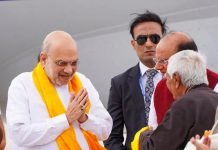
As for the BJP while Prime Minister Narendra Modi has no family or nephews to push, there are many within the BJP who are guilty of nepotism. For starters, Union Minister Amit Shah’s son Jay’s meteoric rise from a businessman to Chairman of the International Cricket Council is there for everyone to see.
In other parties too, including the Samajwadi Party, its Chief Akhilesh is a product of nepotism. Or Tejashwi Yadav, who served two terms as Bihar’s Deputy Chief Minister.
Akhilesh Yadav is Party founder Mulayam Singh Yadav’s son. His wife Dimple is an MP.
Tejashwi Yadav is Lalu Prasad Yadav’s son. Yadav senior has served as MLA, MP, Union Minister and Bihar’s Chief Minister. He was later convicted in a fodder scam and put behind bars.
Down south, the list is equally revealing. If the DMK is a family run party in Tamil Nadu, in Andhra Pradesh, it is Chandrababu Naidu’s family that rules the roost. His son Nara Lokesh is a serving minister in the state ruled by his father.
It is against this backdrop that one would stop and ask: is nepotism justified? Is it fair to deny the deserving and allow parachuting of those who boast of a bloodline? Should privilege outdo merit?